






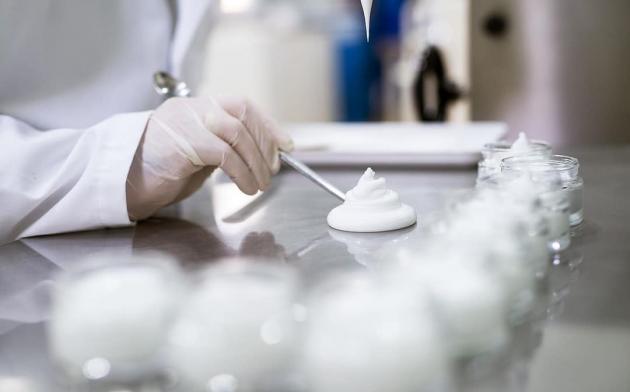

Studies suggest that Matrixyl, known by its scientific name, palmitoyl-pentapeptide 3, has been a major development in the course of dermatological research, lauded for its anti-aging potential on skin cell cultures. This exhaustive analysis investigates the biochemical pathways that Matrixyl may potentially alter, its experimental implications in dermatology and the potential for future research. The review focuses entirely on the scientific studies related to Matrixyl.

Matrixyl Peptide Introduction
Many biological processes rely on peptides, and certain sequences may play a role in everything from hormone action to tissue functioning. Among them, the synthetic peptide Matrixyl has become more popular in dermatological research due to its potential to promote the repair of the extracellular matrix of the skin. This study aims to shed light on the molecular processes, dermatological potential, and possibilities for future advances in Matrixyl research.
Matrixyl Peptide: Functionality and Structure
Matrixyl is a lipopeptide, a combination of fatty and amino acids. Research indicates that this combination may make it more stable than other peptides and allow it to penetrate deeper into the skin without irritating the stratum corneum. Through its potential to imitate a certain sequence found in collagen I, researchers have speculated that this peptide may initiate signaling pathways that ultimately lead to the production of collagen and other matrix proteins. Throughout this section, the function of the peptide in cellular signaling is dissected in more detail, with a special emphasis placed on its interaction with certain receptors on the skin cells considered to be responsible for the formation of collagen, elastin, and glycosaminoglycans.
Matrixyl Peptide: Cell Aging
The principal study focus in Matrixyl has been associated with wrinkles and creases along the skin barrier and the stimulation of certain proteins within the skin's ECM. This section summarizes randomized controlled studies and dermatological evaluations that have assessed the improvements in skin elasticity and decrease in wrinkle depth following controlled exposure to certain Matrixyl formulations. In addition, it explains the processes by which Matrixyl may potentially affect the physiology of the skin, such as the stimulation of collagen production and the restoration of the structural integrity of the dermis.
Matrixyl Peptide: Skin
In addition to its anti-aging potential, Matrixyl has suggested promise in the context of various skin disorders that may damage the skin barrier, including eczema and psoriasis, and improving wound healing properties. This section provides more information on experimental studies in which Matrixyl was suggested to aid the repair of the epidermal barrier and boost the skin's ability to retain moisture.
Matrixyl Peptide: Synergistic Impacts
Investigations purport that combining Matrixyl with other bioactive substances might improve its potential. This review section investigates combinations of Matrixyl with antioxidants such as vitamin C, retinoids, and other peptides. This section investigates how these combinations may lead to more complete skin approaches that address cell aging, photodamage, pigmentation, and inflammation.
Matrixyl Peptide: Challenges and Innovation
Various circumstances, including pH, the presence of additional chemicals, and the composition of Matrixyl's packaging, may influence Matrixyl's stability and effectiveness in formulations. In this part, we will explore the difficulties that arise while formulating Matrixyl and the novel solutions created to address these problems. These solutions include encapsulating methods that guarantee the peptide may remain stable and functional until it is transported to the target region inside the skin.
Matrixyl Peptide: Future Research Directions
Although a substantial body of research substantiates Matrixyl's potential, further study is required to comprehend its potential completely. This section suggests potential future research, such as investigating its impact in animal models of various skin issues, developing more sophisticated handling methods, and conducting long-term studies.
Matrixyl Peptide: Concluding Remarks
Scientists speculate that Matrixyl is a potentially game-changing component in dermatological research, notably in the context of anti-aging studies on skin cells. Because of its potential to improve the skin barrier by inducing natural biological processes that may promote the regeneration of the dermal matrix, it is considered a powerful instrument in dermatology research. Future research is expected to surely broaden its evaluation and improve its formulations, ensuring it remains at the forefront of innovations.
We advise you to always remember that none of the compounds discussed in this paper have been approved for human or animal consumption and should, therefore, not be acquired or utilized by unlicensed individuals outside of contained research environments such as laboratories. This article served educational purposes only.
Researchers may also visit the peptide blog section for the most educational and informative articles about peptides, how they work, their properties, and Matrixyl research functions.
References
[i] Gomes A, Bessa LJ, Fernandes I, Aguiar L, Ferraz R, Monteiro C, Martins MCL, Mateus N, Gameiro P, Teixeira C, Gomes P. Boosting Cosmeceutical Peptides: Coupling Imidazolium-Based Ionic Liquids to Pentapeptide-4 Originates New Leads with Antimicrobial and Collagenesis-Inducing Activities. Microbiol Spectr. 2022 Aug 31;10(4):e0229121. doi: 10.1128/spectrum.02291-21. Epub 2022 Aug 11. PMID: 35950860; PMCID: PMC9431032.
[ii] Aldag C, Nogueira Teixeira D, Leventhal PS. Skin rejuvenation using cosmetic products containing growth factors, cytokines, and matrikines: a review of the literature. Clin Cosmet Investig Dermatol. 2016 Nov 9;9:411-419. doi: 10.2147/CCID.S116158. PMID: 27877059; PMCID: PMC5108505.
[iii] Park H, An E, Cho Lee AR. Effect of Palmitoyl-Pentapeptide (Pal-KTTKS) on Wound Contractile Process in Relation with Connective Tissue Growth Factor and α-Smooth Muscle Actin Expression. Tissue Eng Regen Med. 2017 Jan 19;14(1):73-80. doi: 10.1007/s13770-016-0017-y. PMID: 30603464; PMCID: PMC6171572.
[iv] Zhang S, Duan E. Fighting against skin aging: the way from bench to bedside. Cell Transplant. 2018; 27(5): 729-738. doi:10.1177/0963689717725755
[v] Robinson, L. R., Fitzgerald, N. C., Doughty, D. G., Dawes, N. C., Berge, C. A., & Bissett, D. L. (2005). Topical palmitoyl pentapeptide provides improvement in photoaged human facial skin. International journal of cosmetic science, 27(3), 155–160. https://doi.org/10.1111/j.1467-2494.2005.00261.x
 Foto gallery


